Tuesday

We Have Room to Grow in Our Prayers

I learned some things recently. I probably shouldn’t be surprised, but I was.

I’d started a discussion about “What one thing would you pray for Hillary Clinton?” (That conversation is here: http://nwp.link/FB-PFHillary .)

We had a handful of folks ignore the question and rage – sometimes for, mostly against – Hillary-the-Candidate. And we had a pretty substantial number of “prayers” that were political rants in disguise.

I get that: people have been trained to have strong opinions about this election. That always happens. Moving on…

The majority of people didn’t do that; the majority of folks prayed for Hillary, or described a hypothetical prayer. And that’s where my eyes were opened.

I was struck by the nature of those prayers. Out of a hundred or so responses, the vast majority (>90%+) of the responses apart from the political comments roughly fit into one of two religious categories:
Praying for Hillary Clinton
  1. She needs to repent and stop supporting bad things! or    
  2. She needs to have a revelation of God and get saved!
Or some variation of these two. (Full disclosure: my own prayers were in these two categories too.) They were proper religious prayers. They’re the things we’re told we “should” be praying for. 

These all begin with the assumption that “Mrs Clinton is messed up, and she needs me to fix her, and let me tell you how I’d fixer, cuz I’d fix her good!”

I’m not sure any of us would want to have a crowd praying those prayers for us. She doesn’t believe she’s doing bad things (give her the benefit of the doubt); she doesn’t believe she needs to be saved (her testimony of faith was documented in the conversation).

May I be honest? These feel a whole lot like we’ve been praying, “Make her more like us!” 

And that always carries the intrinsic assumption of “You’re not as good as I am. You need to be better, like I am.” 

Ewww. That is, by nature, something of a curse, not a blessing.

Reading through all the prayers (and I have, many, many times) leaves me feeling like I need a bath.

Relatively few responses were addressing actual issues that Mrs. Clinton is facing: health, destiny, goodness, protection, provision.  These were so terribly refreshing! These carried life, hope, faith, and (dare I say it?) love. These were the prayers I found myself feeling proud of (and they weren’t my prayers!).

This draws my attention to at least one reason why political leaders don’t like to listen to Christians: our communication (to them, among ourselves about them) is pretty unambiguous: We think we’re better than you. We’re going to fix you with our talk, with our prayers.

Our interaction with “the world” is so very seldom actually focused on their needs, their wants, their situation. Our interaction is pretty strongly “all about us.”

And in reality, it isn’t even a little bit “all about us.” Not to them. It needs to be an awful lot “about them,” if we’re going to actually connect with them.

Otherwise, we’re wasting their time and ours.

--

The best part of the conversation will be on Facebook. Come join in.


Thursday

Contempt for God's Kindness

This just ambushed my thought process.

Romans 2:4 says, “Or do you show contempt for the riches of his kindness, forbearance and patience, not realizing that God’s kindness is intended to lead you to repentance?”

He’s challenging the Roman believers for showing contempt for the riches of God’s kindness, forbearance and patience.

Yikes.

Who are the folks showing contempt for God’s kindness?

Well, this verse indicates part of that: the folks who don’t realize that it’s God’s kindness which leads to repentance. Folks who preach something other than God’s kindness? Yeah. Them.

The context makes it even more clear: those who “pass judgment on someone else” (v1) are the folks he’s addressing.

He’s very specific: “Do you think you will escape God’s judgment?” (v3) That’s pretty strong language there, Paul!

More specifically, Paul is saying that believers who condemn other believers, believers who emphasize something other than God’s kindness are “storing up wrath against yourself for the day of God’s wrath.” (v5) That’s what it’s saying, isn’t it?

That’s kind of a problem.

You know these people: people who get in your face (in person, or on Facebook) and shout about how others are going to hell for their sin, or how a nation needs to repent in order to escape God’s wrath. There are folks who go around denouncing everybody who believes differently than they do as false.

Unfortunately, a whole lot of this garbage comes from pulpits around the country.

When you see them, first of all, don’t buy the manure that they’re selling. It’s not good for them and it’s SURE not good for you. In fact, if you’re able, don’t even let them spew that garbage on you. Walk away.

But more than that: pity them. Pray for mercy for them. Because the path they’re on is storing up wrath against themselves for the day of God’s wrath.

And most of all, do not go with them. That’s a pretty ugly destination they’re headed to. If they insist on going there, you do NOT need to go with them.

Show them kindness.

#PrayForGrace

Not Reluctantly. Not Under Compulsion.

Not Reluctantly, or Under Compulsion

Should believers ever charge for their services, for the exercise of their God-given gifts?

Many people quote this verse (from 1 Corinthians 9), “Each of you should give what you have decided in your heart to give, not reluctantly or under compulsion.”

Then they use it to judge each other.

They use this verse, often quite forcefully, to say, “I should have the freedom to give you what I want for your services (or products). You should not make your prices compulsory!” The most frequent examples are authors, counselors and conference speakers: they are “reluctant” to pay $80 an hour for professional counselling, or $40 for a weekend of worship and teaching at a conference, so they pull out this verse to justify their outrage at having to pay for the services they voluntarily choose to make use of. “That’s a gift from God. How dare you charge me for what you got for free?”

Some have been audacious enough to suggest, “Well, if you don’t want to pay for that conference (or book, or counselling), don’t buy it. Nobody is forcing you.” This is generally met with yet more outrage. “It’s my right! Don’t tell me what I can and can’t do!” (And this is an excellent illustration of a spirit of entitlement in action.)

It’s interesting that we can recognize the foolishness of this when we apply this “principle” in other places. “Walmart shouldn’t have prices. We should be free to pay whatever we want!” “Chick fil A shouldn’t have prices on its menu!” or “I’m going to have my car's engine rebuilt, but I don’t think I should pay the mechanic. After all, those skills are just a gift from God.” I’m pretty sure those wouldn’t be received well.

I find it curious that these people are not willing to let the conference speaker do the same thing they demand for themselves, to “decide in [her] own heart what to give.” Rather, these outraged consumers insist that authors and public speakers make their life work available for whatever they themselves have decided in their heart to give in exchange.

In other words, “It’s for ME to decide if I want to give you money, but YOU don’t get to decide if you want to give away your life’s work!”

Don’t we see the hypocrisy in this?

Perhaps it is significant that I’ve never heard anybody use this verse to defend someone else. If we’re going to apply it to ourselves, then it applies to our brothers and sisters, doesn’t it? Yet nobody has ever said, “This conference speaker should give what he has decided in his time to give, not reluctantly and not under compulsion. He should not be required to work for the rate that I want to pay him. That’s his choice, not mine!”

The verse in question (2 Corinthians 9:7) doesn’t actually apply in this conversation, anyway. Paul is not laying this down as a general principle for doing business in this. Not at all. He’s talking about receiving a voluntary offering for an impoverished church. He’s not talking about demanding things from other believers. He’s certainly not talking about how we demand others run their businesses and ministries!

Bigger picture: Are we not sons and daughters of the King of Kings? That makes us royalty, doesn’t it? Royalty never (not ever!) go around demanding goods and services for free. In fact, royalty goes out of their way to out-give others, to demonstrate generosity. That is our heritage, not shaming people trying to feed their family with the tools God has given them.

We, as sons & daughters of the greatest King of all, should behave like royalty, not like begrudging beggars, particularly with one another.

~nwp


Why the Law?

Way back when, God proposed a relationship with humankind based on equal access for everybody, one-on-one with God (Ex 19:6).

But the humans involved rejected that covenant, and substituted a counter proposal based on a priesthood and obedience to rules, aka Law (Ex 20:19). What a disappointment that must have been to God.

And so the Law was given, in deference to the only covenant the human species would accept at the time.

And of course, since there was a Law to follow, there had to be enforcement of that law, and that was always done by the people's god. So God, who never wanted the Law, had to either enforce the Law that was not his idea, or walk away from the human race. He said plainly, "I have no pleasure in the blood of bulls and lambs and goats." (Isa 1:11)

Nowadays, though, we have a New Covenant, based neither on a priesthood nor obedience to a Law. So the Law, being fulfilled, has been archived. The entire system of relating to God with the Law was destroyed when Jerusalem went down (70 AD). It could never be revived.

Nowadays, we all have access, face-to-face, with God (Heb 4:16). Even better, we're seated with Jesus, full time with God (Eph 2:6). Just like he always wanted.

Aaah. That's better. That's MUCH better.

--

The best part of the conversation will be on Facebook. Come join in.

Study to Show Yourself Approved?

Has someone brought this up to you before? 

"Study to shew thyself approved unto God, a workman that needeth not to be ashamed, rightly dividing the word of truth."

That's the King James for 2Timothy 2:15, and people often bring this up as a justification for their fascination with the Old Covenant, or to reinforce their point that you have to earn favor. 

There's so much Scriptural bastardry in how we've taught this verse. I'm really quite embarrassed.

First, "Study" in 1611, when King Jimmy commissioned his translation meant what the Greek word σπουδάζω means. However, in 21st Century English, the word means "be diligent," or "do your best." It has nothing to do with academic study. 


I'm very much in favor of studying the Bible. But this verse is not even remotely talking about that. Illustrations (like the one here) that tie this verse to a picture of a Bible are seriously missing the point of this scripture!

Second, παρίστημι, "show yourself" (or worse, "shew thyself
") in 1611, is more about "Show what you're really like," not "work for your approval."

"Approved" speaks of a coin that's been demonstrated to be real silver, not lead or tin: this is the real thing. Again, "Show what you're really like."

So the whole thing is more about, "Be careful to let who you really are show." The idea of "Don't hide God's delight in you" is there as well.

We could go on.

This is probably why the NIV (the "Nearly Inspired Version" lol) translates it as "Do your best to present yourself to God as one approved, a worker who does not need to be ashamed and who correctly handles the word of truth."

For decades, this verse was used as a club, justifying church rules and expectations, requiring my suffering sweat (or my academic study) in order to be acceptable.

Don't let people use the Bible as a club. It's a love letter from a lovesick Daddy who wants his kids back. Anybody that uses Scripture to control others is a good person to pray for, but not a good person to follow.

Reflections On American Political Candidates

Election Thoughts

This has been the strangest presidential election season I can remember, and I remember back to JFK in the 1960s. Fair warning this is going to appear really cynical, but stick with me to the end before you write me off. 

If nothing else, the campaigns of this political season have given us nearly endless material for sardonic memes and twisted humor. But our laughter is mostly sad, not humorous, and it’s without hope.

We can easily find a thousand reasons why Mr Trump is not fully qualified to be Chief Executive of America. And his opponents are right: he really is crass and thoughtless, maniacally egotistical and he lacks any political experience whatsoever.

And just as easily, we can find a thousand reasons why Ms Clinton is not fully qualified to be Chief Executive of the United States. And her adversaries are right: she really is power hungry, committed only to her own aspirations, and she lacks any experience whatsoever other than political experience.

There appear to be a small number of people who are honestly confident supporting one candidate or the other, and there probably are a few more who are so blindly loyal to their ideology that they could not conceive of not voting for the candidate of their favored political party. And I’ve met individuals who are convinced that it’s “God’s will” that whichever candidate they support should defeat the candidate that they demonize, and anyone who disagrees is obviously opposing God.

I find myself considering the two options in terms of which choice is less unthinkable. Would I despise myself less if I voted for Hillary to be my president, or would I forgive myself sooner if I cast my ballot for The Donald to be my president. I can’t decide.

I don’t think that’s a very good way to make decisions anyway: which would I hate myself less for, should I support them? Neither candidate is tolerable from my viewpoint.

Well then. If I don’t vote for the candidate, then perhaps I could vote for one party or the other.

But that doesn’t offer to help much either. One party says they support the business and economic foundation of our country, and that’s a good thing, and they speak about certain moral choices that I’m used to supporting. The other party says they support the social foundation for the country, and that’s a good thing, and they want to help people that can’t help themselves and I'm used to supporting that.

That’s what they say. But when I watch what they do, I observe that there’s not so much difference between the two parties. Both of them seem to have sold out their collective souls for campaign contributions and Political Action Committees. And certainly, both parties have let any opportunity to create actual change slip through their fingers, as they have both of them lined their own pockets, secured their own retirements, and exempted themselves from the rules they demand everyone else shall live under.

Worse, both parties in our two-party political system appear to be on somebody’s payroll, and it looks to me like they’re on the same somebody’s payroll. And if I look closely, it appears that this real power behind them, if I were judging by what their handsomely-paid minions actually accomplish, that someone seems to hate my country and despise my faith.

So I can’t, in clear conscience, vote for either party. More specifically, were I to vote for either party, for either candidate, it seems to me that I’d be completely wasting my vote. The “powers that be” would accomplish their own agenda, regardless of who sat in the oval office and took their orders.

Maybe I’ve been gazing into Heaven for too long, but the “halls of power” of this earth sure look pitiful and powerless to me recently. And it dawns on me that our electoral process serves the same purpose in our generation that the Coliseum served in Rome’s day: cheap entertainment for the masses, keeping them distracted from the real issues in the country, in the world.

All of this has led me to this strange thought: If casting my vote for Donald or Hillary is a wasted vote, a meaningless gesture, then is there something that I can do with my vote that is not a waste, that is instead meaningful?

When you begin to think outside the box, all sorts of opportunities begin to show themselves.

Here are some of my thoughts about what I could do instead of investing myself in a political process that revolves around choosing the less despicable of two despicable candidates for a increasingly powerless position. (Note that I am not saying that the presidency is “powerless,” merely that is it has less real power, less ability to effect real change, than it used to have.)

·         I could decide not to participate in the political charade at all, choosing to invest my time, money and energy into something useful. Perhaps I could pray, not so much for “my candidate” to win, but for the values of the Kingdom (love, for example, or humility) to be present in those who lead my nation or yours.

·         I might choose not to participate in the political process at all, choosing instead to invest that time, money and energy into something that brings peace, rather than supporting tension, division and outrage. Perhaps I could plant a garden, or begin volunteering at the food bank, or take a vacation, or teach someone to read, or sit with my family in the evenings. Maybe I could write a story or make pottery or just dig a hole and fill it back up again.

·         I could participate in the political process, but do it in a new and different way. Perhaps I could cast my vote for candidates not affiliated with the two main parties: it’s time we were done with the two-party system anyway. There are competent candidates from the Libertarian party and the Green party. Maybe it’s time to vote for them, since my vote would be meaningless if I squandered it on Donald or Hillary anyway.

·         I could ignore the national political scene altogether, and invest myself in my city’s government, or police force, or port commission or fire department or school board. Instead of being a tiny voice among millions of tiny voices shouting in favor of the despicable candidate or the unconscionable candidate, maybe I could be a real voice, maybe one that has a chance to actually get heard, in a much smaller and infinitely less-glamorous arena in my own neighborhood.

·         Instead of giving donations to candidates or committees or other political tomfoolery, perhaps I could give my money, and maybe even (gasp!) my time, to the local street mission, or to foreign missions, or to that business that’s trying to create jobs for the otherwise unemployable members of our society. 

·         Instead of participating in the time-honored tradition of blindly defending my candidate and pouring out my outrage on their opponent, perhaps I could choose to invest in words that heal, words that encourage. These could be distributed anywhere: public transportation, local businesses, local government. Some of these places – some of these people – haven’t heard a real “voice of reason” for longer than they can remember. Maybe I can be that voice of reason, or maybe I can aspire to be a voice of encouragement and hope.


I’m interested in your opinion – certainly not your opinion about candidates – but about how you could defy “the system,” how you could get out of “the box” and do something meaningful. 

The best part of the conversation will be on Facebook. Come join in.

The Fighter’s Regrets

Have you ever woken up with a song floating through the fog in your mind? Sometimes I think that’s just an echo of a dream or a memory, particularly if it’s a song I’ve heard or sung recently.

How about a song from your ancient history in your mind as you woke? I actually pay more attention to these; there’s less chance that it’s just my subconscious expressing itself.

I’d like to share one of these with you. You may find the process interesting, but I believe the lesson might apply to several of us.

Recently, I woke up with a song from my youth playing in my mind, and trust me, that’s from a long time ago. The song had nothing to do with the dream as far as I could tell, and I could only remember snippets of it – really only one phrase.

But that phrase kept replaying in my mind: that caught my attention. And as it replayed, my memory of the lyrics grew. This also suggested to me that this might be from God. So I spoke with Father about it, acknowledging that I thought he might be up to something; I asked for insight, and I paid attention as the memory of the song replayed and expanded in my mind.


Some themes began to stand out in the lyrics that kept playing in my memory. One of them definitely seemed to have the fragrance of my Father about it, so I meditated on that one. That is, I thought about it; I let it roll around in my mind to see what might come from it.

When my mind began to warm up (you know, I really appreciate the fact that God invented coffee!), I fired up Google and looked into it a bit more. And I realized that even after my memory had been playing it back for an hour or two, I had remembered only one verse out of five; the rest hadn’t come back to me, though those verses had actually been more important to me when the song was new.

Here’s the song: https://youtu.be/MYPJOCxSUFc. It’s called The Boxer, by Simon & Garfunkel. It was the last verse alone that spoke to me through the morning fog:

In the clearing stands a boxer
And a fighter by his trade
And he carries the reminders
Of every glove that laid him down
And cut him till he cried out
In his anger and his shame
“I am leaving, I am leaving”
But the fighter still remains*

This verse had literally never made sense to me, but suddenly, there was a message in it for me.

It speaks to me, but I’d like to share it with you, because I suspect it might speak to other, too, and maybe that includes you.

I confess: I’m a man of fairly strong conviction. I stand up for those convictions, and it’s not inappropriate to say that I fight to maintain them. If I believe something to be true, I’ll fight to defend it.

Father gently pointed out that I, too, carry reminders of those fights, reminders, I suppose, every glove that laid me down or cut me till I cried out. I’ve paid a price to defend my convictions. Like the fighter in the song, the price has been paid in several areas of my life: in my memories, in my body carrying the stress, in the solitude that comes from having lost relationships.
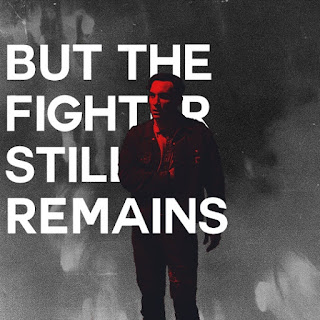
Then he drew my attention to the fighter’s vow, and that I’ve made vows like that as well: “I am leaving, I am leaving” but I don’t leave. I remain. I still defend my beliefs, my convictions, and I’m still laid down and cut up sometimes. I’m still wounded from the fights that I am convinced are right and good. And they still bring the fruits of “anger and shame” into my life, just like they did in his.

(Didn’t someone say “You shall know them by their fruit”?  Hmmm....)

This is something that’s come partly from my character (I believe that standing up for “what is true” is important), partly from my youth (I was taught that truth is important and should be stood up for).

But this fight may have been fanned into the biggest flame from my years in Bible-believing churches. “This is what I believe to be true, so I must defend it at all costs.” We teach that, we believe that, in many evangelical churches, and while we defend different truths in denominational churches, we still defend them vigorously.

Think about how Christians respond when a movie comes that we don’t like out (remember Russell Crowe’s Noah?). Consider how Christians respond to “The Homosexual Agenda” or to political candidates, or to the abortion issue.

We’re taught to fight. And we do fight. Vigorously.

And let’s be honest. We don’t win these fights. Hollywood’s marketing now counts on “Christian outrage” as a publicity tool for their controversial movies, and they’re always right. Christians have not affected “The Homosexual Agenda” that we’ve stood against, abortion is still a very big business, and we’ve never once had an Evangelical believer in the Whitehouse, despite our fights on those issues.

The world knows: Christians are fighters. They don’t win, but they sure will fight. Behold how much they fight.

Father hasn’t been talking to me at this time about the issues in themselves. He’s only been using them to illustrate the fight, to illustrate the blows and the cuts that so many of us have taken in the fights.

Then he drew my attention to the refrain:

“Lie-la-lie. Lie-la-lie-lie-lie-lie-lie, Lie-la-lie
Lie-la-lie-lie-lie-lie-lie, lie-lie-lie-lie-lie.”*

Oh my. It’s right there. I’ve sung this haunting refrain with Paul Simon and Art Garfunkel, and I never saw it: there’s a lie here, and the refrain rubs my nose in it. That’s a lie, lie lie!

There’s perhaps some room for discussing what the lie is. The song itself identifies one:

“He cried out
In his anger and his shame
“I am leaving, I am leaving”
But the fighter still remains.”*

And I’ve done that. I’ve declared that I’m quitting this fight. But I haven’t really done it. I’ve lied. I’ve gotten tired of being beaten up, tired of the anger, tired of the shame, and I’ve tried to quit the fight. And I’ve failed.

As Father comforted me in this, I realized that for a fighter, the fight is a choice. It’s an option, but only one of several options. I don’t actually need to fight.

As he held me and murmured his love for me, I realized that these are not fights that have helped me, or have helped the Kingdom, not even a little bit.

I occasionally have “won” a fight, but what was the result? Maybe I could say I won, that I defeated someone who believed differently. So what? Now they’ve been defeated, now they’re wounded, too. And now they resent me, and worse they resent my message, and they resent the truth that I fought for.

You know, I don’t think anybody’s ever been bullied into receiving the truth, have they? Oh, sure, we’ve bullied people into acting like they know the truth, but that’s just equipping them for hypocrisy. That’s not a win, not really, not for anybody.

For myself, I’m going to reflect on this for a while. I’m wondering if I might actually defend my beliefs better by walking them out than I would by fighting for them. I don’t know. I’ll think about it.

I may not need to be a fighter, alone in the clearing. I may not need to be laid down, cut open. I may not need to subject myself to the anger and shame.

The Kingdom is not about any of this, is it?

Lie la lie….

----

* From "The Boxer," by the American music duo Simon & Garfunkel from their fifth studio albumBridge over Troubled Water (1970) ©1969